
A Game Changer in Accepting my Identity
One of my earliest childhood memories is dancing with my parents to the age-old Bollywood classics in my living room. The Kal Ho Na Ho soundtrack made its way to every corner of my childhood home, entangling with spoken words of my mother tongue. Listening to that music now brings forth the comfort of an identity that I seemingly failed to understand during part of my adolescence.
Almost two decades ago, my parents immigrated from the southern Indian state of Karnataka to Michigan in the 90s. My parents’ first friends here were other Kannadigas, and that became one of the first communities we identified with. Because of this, in the early years of my childhood, Kannada was exclusively spoken at home- despite my consistent refusal to learn it. When my family assimilated more into the country, our social circle began integrating with other types of Indians- those that spoke their own various languages.
As a result, English slowly became the main way I communicated to my family and friends, and it became so normalized that it soon became the only language I learned to speak.
For years, the gravity of never learning my mother tongue didn’t faze my perception of my identity. However, I was aware that my Indian identity had been tagged onto my skin since birth, and that was something a box of blonde hair dye and green contacts could never change. For instance, in first-grade art class, I vividly remember a row of self-portraits hung at the top of our classroom displaying a sea of peach crayons, among them- a few hints of brown. As I continued in grade school, that same image was illustrated on the sidelines of my high school volleyball team as we began warm-ups for our games.

In response to the community I grew up in, I naturally began embodying the time-old tale of many ABCDs (American-born Confused Desi): any association with my Indian identity ceased to exist outside the walls of my home.
During middle and early high school, an avoidance pattern appeared when my peers would ask me questions about the food I ate, the music I listened to, and the language I spoke. At one point, I began telling people that my family spoke Hindi (the official language of India) just so I wouldn’t have to explain that Kannada wasn’t in fact the native language of Canada. Or when two of my friends found out that their family lineages date back to the same tiny village, in my head, I wanted to tell them that no one would care. I refused to openly share things in a self-preserving attempt to save myself from what I assumed was second-hand embarrassment.
Unlike the background of my schools, my friend group was ethnically diverse. I was familiar with hearing about their respective cultures. However, it appeared that a new insecurity formed despite the very intentional repression of my Indian identity. Often, my friends communicated with their families in their native languages, as I, continued to speak in English to mine. In a way, I felt like I had been doing myself a disservice, burying this piece of myself during what really seemed like a self-sabotaging teenage crisis. So much so, that I resented myself for not seeing that my two identities weren’t this dichotomy I made it out to be for years and that maybe they could coexist together as one entity.

As I neared the end of high school, I rediscovered a lot of the Indian music that
reminded me of my childhood. Granted, by the time I committed to college, I never would’ve expected to see “Mr. Brightside” in the same playlist as “Tu Jaane Na”. Starting college was my opportunity to start fresh, so I took that as to get more involved in my school’s Indian community. However, there appeared to be recurring insecurity that still bothered me. As my new college friends began speaking in their native languages to each other, I still continued to communicate in English.
Moreover, for the past two years in college, I realized that perhaps my fixated interest in immersing myself in the culture I once rejected seemed like a pitiful facade in proving to myself that I am Indian. After all, I still could not speak the language I grew up around.
During the trips we would take to India every other year, I felt like a stranger speaking to my family I usually only saw across a screen. My biggest regrets now lay in never being able to
form relationships with them because I could never communicate with them. As time has passed, I now have family members, such as my great grandmother and grandfather who have forgotten English with old age that speak to me through my parents, as I smile and nod through guilt.
I often think that a large part of this guilt is tied to embarrassment. When I choke out a few broken sentences in Kannada, my parents cheer me on like a child learning their first words. My pronunciation and unfitting accent sound unauthentic, which makes me nervous to try in the first place. The idea of learning a language itself is intimidating too. Though I understand the language passively, actively attempting to build the vocabulary and piece it together into a piece of flowing speech has prevented me from trying in the past.
At this point in time, it feels like I’ve reached a breaking point in this latter part of my so-called “identity crisis”. After months of wishful thinking, I realized that perhaps it was time for me to take charge of learning Kannada. I see that my experiences during the past two years of being at college haven’t necessarily been some self-fulfilling coverup in understanding my identity, as much as it felt like one. Rather, I’ve garnered newfound experiences and wholeheartedly cherished every single one in a community that I might’ve thought about joining. I’ve gained a greater appreciation for a part of myself that I was previously so ready to erase.
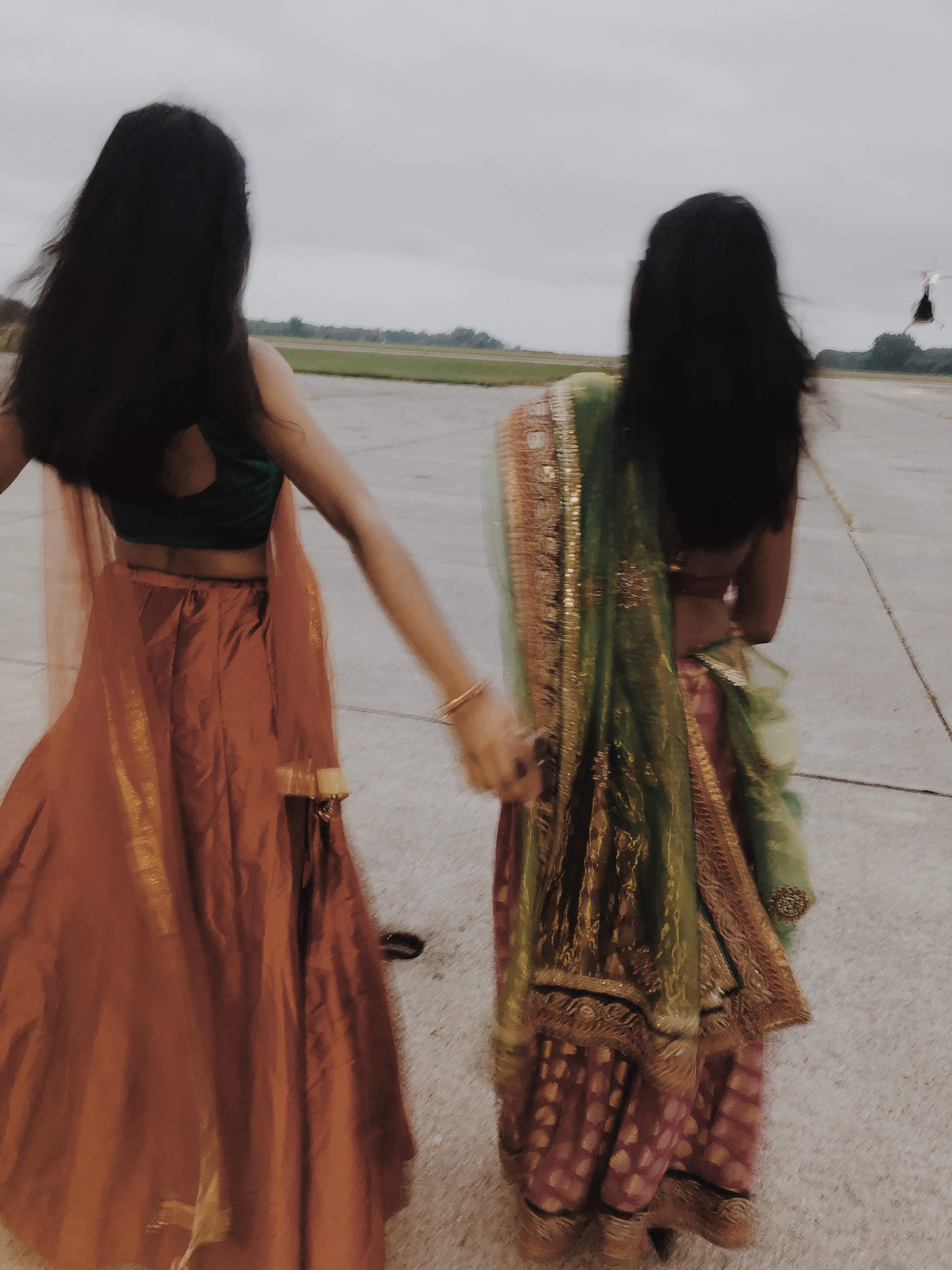
Today, I find myself dancing to Bollywood classics with my friends in our college dorms, reliving the memories from my childhood living room. We rejoice in the identity we share and have grown to love with time but more importantly indulge in a culture that has always felt like a piece of home.
 Personal Reflections
Leave a comment