
A glance in the mirror is all it takes to tell the story of a wistful generational dream. A dream clung on by the innate human desire for better, for more. But a dream so paradoxical in nature that it spins like a top in hypnotizing circles through an endless labyrinth.
It was in the early 90s when the big three automobile companies in the Motor City (Detroit, Michigan) began handpicking fresh recruits from nearby schools like fruit off a tree. My dad, along with many other new mechanical engineers at the time, saw that opportunity as the idealized version of an Americana tucked away in his baggage, itching to be chased, sought, embraced by the arms of freedom and boundless opportunity. A golden ticket into any of these three competing car companies that reigned over the state would ignite a renaissance of a newfound community in a place he had none. And that’s exactly what it did.

The automobile companies always appeared like high society in their upkeeping of unwritten social rules, such as using the family car as a symbolic representation of their place of employment. So naturally, when my dad got hired at Ford in ‘92, his purchase of a silver Ford Taurus became the closest option he had to a sports car, as he attempted to stay afloat on the sinking raft of my mom’s endlessly piling student debt. Everyone has those monsters lingering under their bed, waiting for them to break before tossing them off into the deep end of delusion. However, it always seemed like some version of my dad’s idealistic American dream kept those monsters at bay, as he engineered cars with a childlike curiosity operating on overdrive. Every so often when I was younger, his course hand cut through the air to motion me towards his desk. His mind had taken up every corner of the space in an organized chaos, with foreign calculations scribbled on the sticky notes that framed the edges of his monitor and sketches stacked in cubicles. Hidden in the dullness of his everyday work, 3D arrays of intricate car designs animated a cartoon figure folding at immediate impact with the gliding of his cursor. His voice tapered off into some foreign language, as the colliding geometric constructs on his PowerPoint held my attention in their hands.
“Does that make sense?” he’d ask with a toothy grin.
I’d peer up to meet his eyes and reply, “that’s really cool, Dad”, before shuffling my MP3 to Train’s Drops of Jupiter to tune out his voice.
The following week, it would be a new presentation, and he would do the same thing. This was his Americana, where a simple desire for better crafted a world that transformed piece by piece not only for him, but for the next generation, whose lives were only going to be better, richer, and fuller. And that was mine.
Shortly after I was born, my dad transferred to Chrysler, where a family minivan, a Chrysler Town and Country, replaced his Taurus in a typical rite of passage to suburbia. That van was built and bred American, and almost seemed like an ode to the birth of their first child, also built and bred on American soil. My parents were planting the seeds of permanency, and that minivan became the mode to navigating their dramatically shifting Americana, as I began exploring mine.
Feeling American was no joke to an eight-year-old in a place like Michigan, especially after it had quickly become a living paradoxical reality. Behind the oversized glasses hanging off the bridge of my nose, my mind wildly configured through these unusual associations in an attempt to find my place. I’d grown accustomed to the eight months of bleakness succumbing us to the four walls of our homes, as we cycled our days through the prolonged winter darkness under the twinkle of the Michigan snow. But by the time May rolled around in the state, the following season initiated a massive flock of our residents to our own local paradise, “Up North” or to the upper peninsula (“UP”) to reside in their family cottages in a sort of backwards bird migration. A summer at the cottage always included a golden triad of a boat on one of the five Great Lakes, a six-pack of beer, and Kid Rock singing about how great the “UP” is. Every summer, pictures of square-cut vacation homes squatted on the shoreline of the lakes, which glimmered through scenes of a Pure Michigan ad.
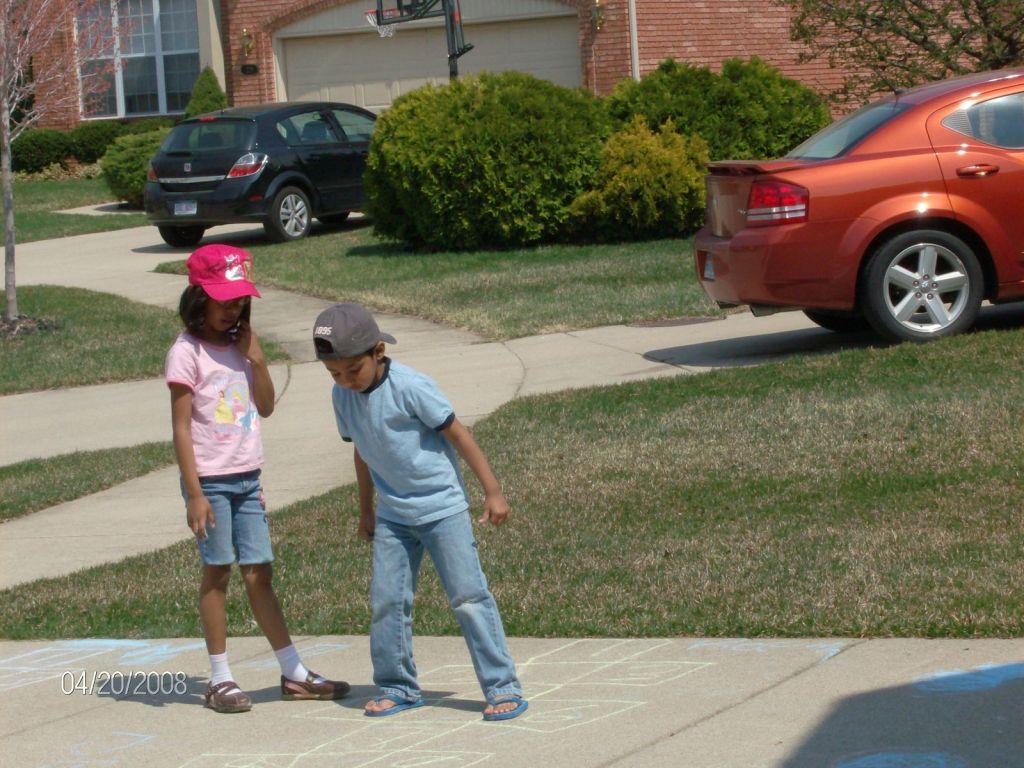
They were like the rows of identical white homes propped in my own cul-de-sac, where I built snow forts and imaginary worlds with my neighbors, the Coopers, who began their 5:30 PM casserole dinners with their hands held in grace. Their kitchen radio played the same soft pop rock tunes I’d hear at the grocery store, until Journey’s Don’t Stop Believin’ began playing, and their choral singing billowed through their windows into the cul-de-sac. They captured the true piece of an Americana I’d lost myself longing to be a part of. An Americana that didn’t look like a summer of stuffy car rides to Niagara Falls and homemade dinners I begged to not show up in my lunchbox the following day.
Regardless, my family had ironically developed a strange affinity for celebrating the most American holidays, which temporarily eased the former desperations created by my naïve ignorance. Memorial Day and July 4th sent our family into our own red, white, and blue orbit, where the patio set the dinner table for the barbeque assortment of my dad’s tandoori chicken and turkey burgers. The grill aroused a smoky richness, slyly moving through the thickness of my aunt’s forested backyard and into the cracks of the door of her quaint colonial home. Inside, the kitchen swarmed in its own irregularities of bottles of swanky French wine on the edge of the countertop like they were pieces in an art exhibit. All while a classical Eastern harmonium enveloped each crevice of the room as it intertwined with the muffled roars of laughter and a language sounding like home. A home where these moments first sculpted my pure, forsaken ideas of an Americana I couldn’t quite grasp yet.
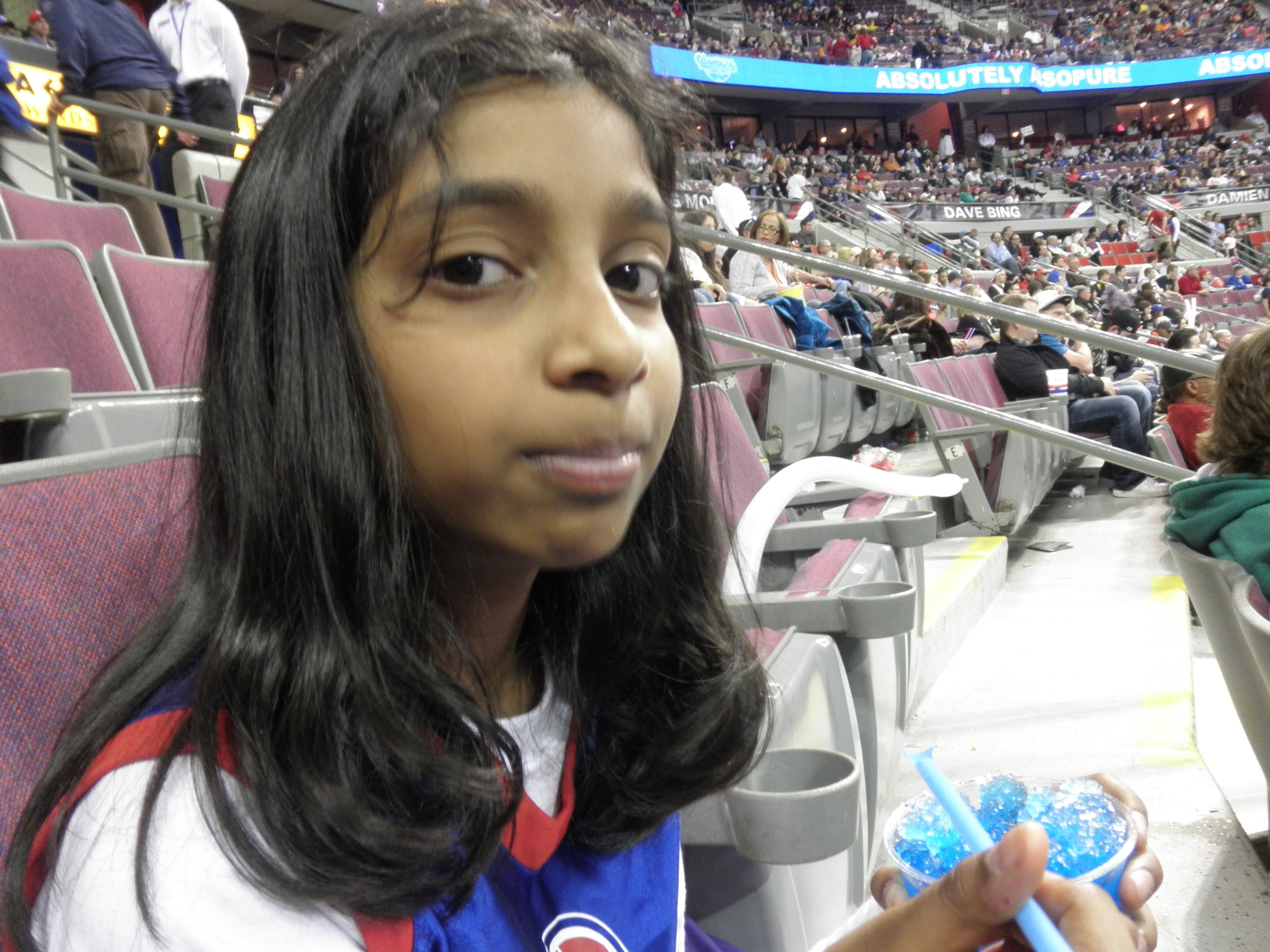

However, occasionally matching my dad’s unchanged, wide-eyed views of his Americana often pulled me out of my own. When he restarted his college tradition of attending Pistons games, it seemed like our family had finally found its niche, like it was the pot of gold at the end of a rainbow. I’m certain my dad believed my brother and I’s early exposure to Michigan’s sports mania would meet some self-fulfilling prophecy that we could one day be college athletes like him. After all, his youth soaked in the utter chaos of a back-and-forth lifestyle of playing basketball and studying, all supported by his eccentric regimens of drinking raw eggs and jump roping for hours to counteract his lanky build. The rush of excitement began while my brother and I juggled our assorted spread of NBA trading cards on our petite legs until the fixed potholes jostled the cards off to the floor of our Town and Country. Reaching over the seatbelt restraints, we’d restart our spread, eager to see the images transform into 6-foot figures before our eyes. When the flashing lights illuminated the players’ uniform jogging, we’d stand on the edge of our toes with our jerseys hanging above our knees. A thrill amped my brother and me to make the hair on our arms stand stiff, as we felt our greatest pride at that time: being a basketball family.
Chasing that familiar pride had clearly become a priceless game, especially after the 2008 economic recession that toppled the automobile industry down to nothing but a series of front-page headlines and pitiful background whispers. For almost a decade, being a Chrysler family tightly intertwined our sense of belonging in the already crocheted Americana we arrived to. So, when my dad began working at General Motors, we sold our minivan, ripping out the decade-old sown-in threads with it. Next thing I knew, I was pulling the door handle to one of many Chevy Equinoxes that ran rampant alongside the top-down Jeeps in my high school parking lot, as if the town was barely hanging on to their last ounce of originality.
But my dad always embraced that lack of originality a little more than I did, especially after I began playing volleyball. His personalized school quarter zip and the shrine of volleyball posters exhibited on our basement walls told a story of utter pride- a euphoric feeling I’d longed to experience from my parents. In a way, it was like the families I’d grown up seeing in my neighborhood that endlessly bred new generations of college football fans. These were the ones that slapped a flimsy Spartan or Wolverines flag in the forefront of their house like it was their outlandish nationalism reeking from their tacky home décor. However, our last name engraved in the varsity athletes list in the school hallways mirrored some form of that American dream my dad brought over almost two decades ago. But the superficial sense of community I got from being in the sports world withered away until bigger cracks erupted in my view of the Americana that my dad had so rosily painted for us.
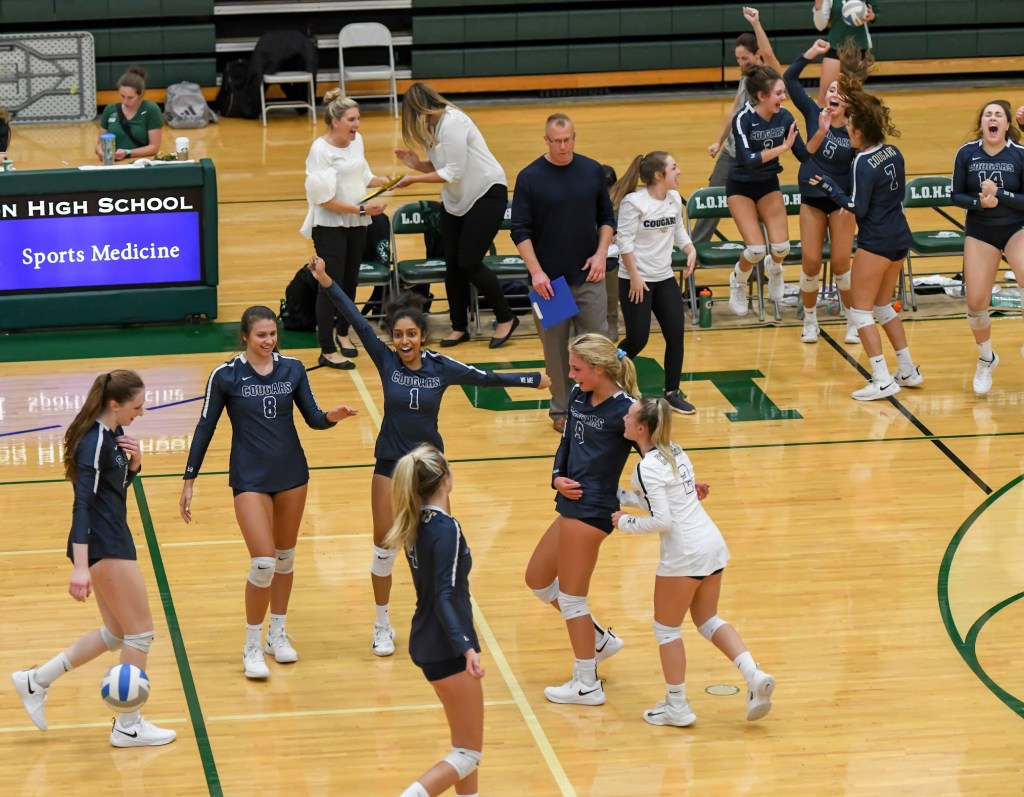
My Americana yellowed like the pristine white jerseys and matching shoes I took to the courts. It painted a world in which my curly hair had been fried every night before a game to blend in with my team’s sleek blonde ponytails, as we stand with our pinkies clasped at the endline. My hand would be rested over my chest, as I sang the only national anthem I ever learned. Nobody could be fooled, I’d think, even as my coffee complexion never quite told the same story my words did. The stares in my magazine catalog hometown followed me to my high school bleachers, the same way they had during a classroom discussion on 9/11. Before I knew it, I’d shrunken into a concrete box written by a whitewashed stereotype on a sitcom. My feeble hairy arms were a target to the opposing player across the net at the blow of the ref’s whistle, just as they were to the naïve ignorance of my eight-year-old classmate on the playground. The kitchen table conversations, where my mother warned me about the price tags that came attached to my skin, dragged heavily as I lunged towards the ball. Deflecting it to my teammate for the finishing point, my reflected wide-eyed outlook on my dad’s Americana fell to a dim. The pieces of my misunderstood identity shattered like a broken mirror until all that was remaining was a background roar of cheers and the lingering sting of rubber on my arms.
But the color and richness of a small Jesuit school pieced together an Americana so vastly different from the one I had been living. An Americana I had struggled to piece together out of my black-and-white lens. I watched like a bystander as the mother tongue I refused to learn spilled like silk through my friends’ lips to their relatives overseas, as I confront mine in regrets through empty phone calls. The melodies that floated through the air at a Fourth of July barbeque weren’t just nameless artifacts to fill up space, they were dainty memories carried in their back pocket like a photo in a wallet. They molded an Americana from the same dough I had, but the contrasting pieces of their identity had kneaded smoothly, as mine look like a disfigured heap of elapsed afterthoughts and regrets.
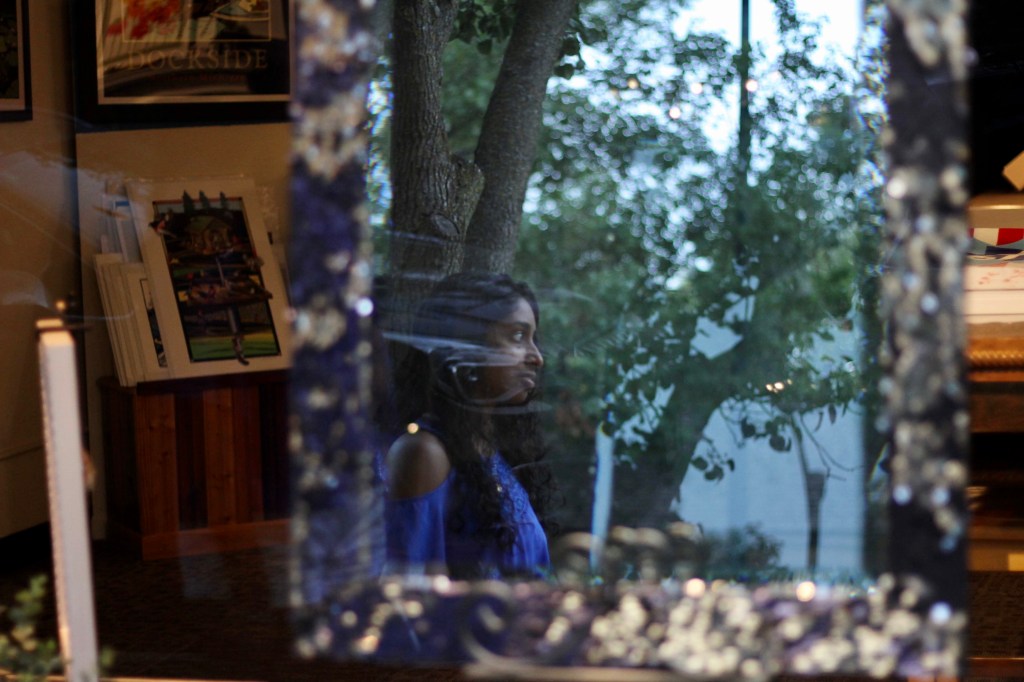
A glance in the mirror is all it takes to tell a story of dark eyes hollowed out above an ancestral nose and curly locks messily brushed against a pigmented complexion. It tells a story of a blended Memorial Day celebration and a trip to Niagara Falls. A yearning for belonging found in a car company and a basketball team. A dangling Cross in the corner of a classroom and a family recipe soaking a college apartment in its tangy fill. My Americana is a paradox, as it blooms like a weed in its uncategorizable, misunderstood nature. In its ironic self, it shapes a juxtaposing tangled concoction of the little pieces that reflect back in the mirror I see. A mirror that reflects a transforming journey of my American dream, and thus, my dad’s wide-eyed love for his beginning in the Motor City.
 Personal Reflections
Leave a comment